
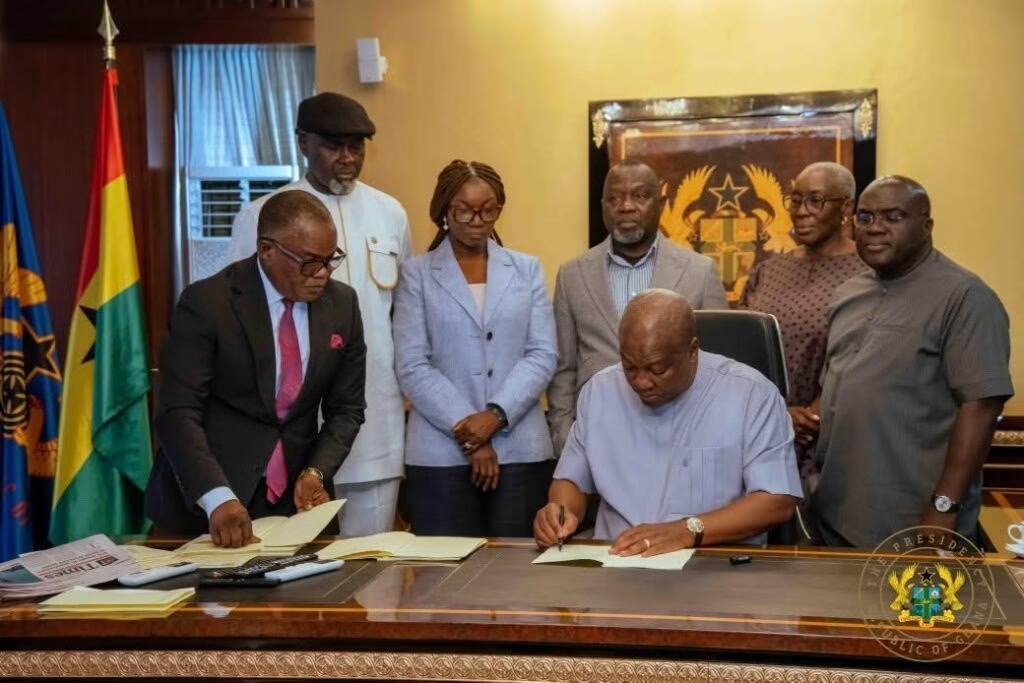
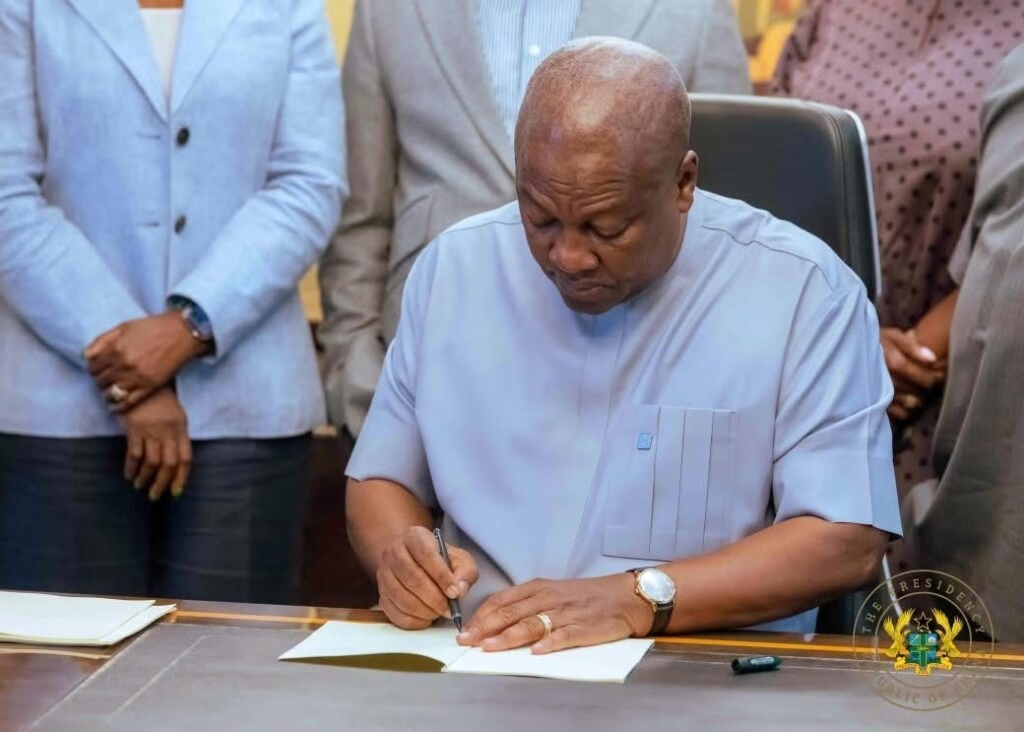
John Dramani Mahama has assented to five major bills passed by Parliament of Ghana, marking a significant step in reforming key sectors of the country’s governance framework.
The bills, signed into law on Tuesday, March 31, 2026, include the Security and Intelligence Agencies Act, 2026; the University of Engineering and Agricultural Sciences Act, 2026; the Ghana Deposit Protection (Amendment) Act, 2026; the Growth and Sustainability Levy (Amendment) Act, 2026; and the Education Regulatory Bodies (Amendment) Act, 2026.
Speaking after the signing ceremony, President Mahama highlighted that the new Security and Intelligence Agencies Act introduces major structural changes, including the abolition of the Office of the Minister of National Security.
Under the new arrangement, the President will have the authority to assign oversight of security agencies to any designated minister.
He further noted that the legislation restores the original name of the Bureau of National Intelligence (BNI), previously known as the National Intelligence Bureau, to eliminate confusion with similarly named institutions.
On education, the President announced that the University of Engineering and Agricultural Sciences Act establishes a new public university, with its main campus to be located at Bonsu in the Eastern Region.
Additional campuses are planned for Ohawu in the Oti Region and Acherensua in the Ahafo Region, aimed at expanding access to specialised higher education.
Addressing fiscal reforms, President Mahama explained that the Growth and Sustainability Levy (Amendment) Act reduces the levy imposed on mining companies from 3 per cent to 1 per cent, following the introduction of a revised royalty structure.
He also indicated that amendments to the Education Regulatory Bodies Act will provide greater flexibility for private tertiary institutions, including the opportunity to obtain charters, a move expected to enhance autonomy and growth within the sector.
In the financial space, the Ghana Deposit Protection (Amendment) Act expands coverage beyond traditional banking institutions to include mobile money wallets and other digital financial platforms.
“This ensures a wider scope of digital financial assets are secured,” the President stated, underscoring the government’s commitment to adapting financial regulations to modern trends.
The signing ceremony was attended by key government officials, including Cassiel Ato Forson, Dominic Ayine, and Jane Naana Opoku-Agyemang, among others.
The newly enacted laws are expected to have far-reaching implications across Ghana’s security, education, and financial sectors, as the government continues to implement reforms aimed at strengthening institutions and improving national development outcomes.