|
Getting your Trinity Audio player ready...
|
Some crimes never fade from public memory. They remain painful reminders of a time when fear, violence, and lawlessness challenged the peace of society.
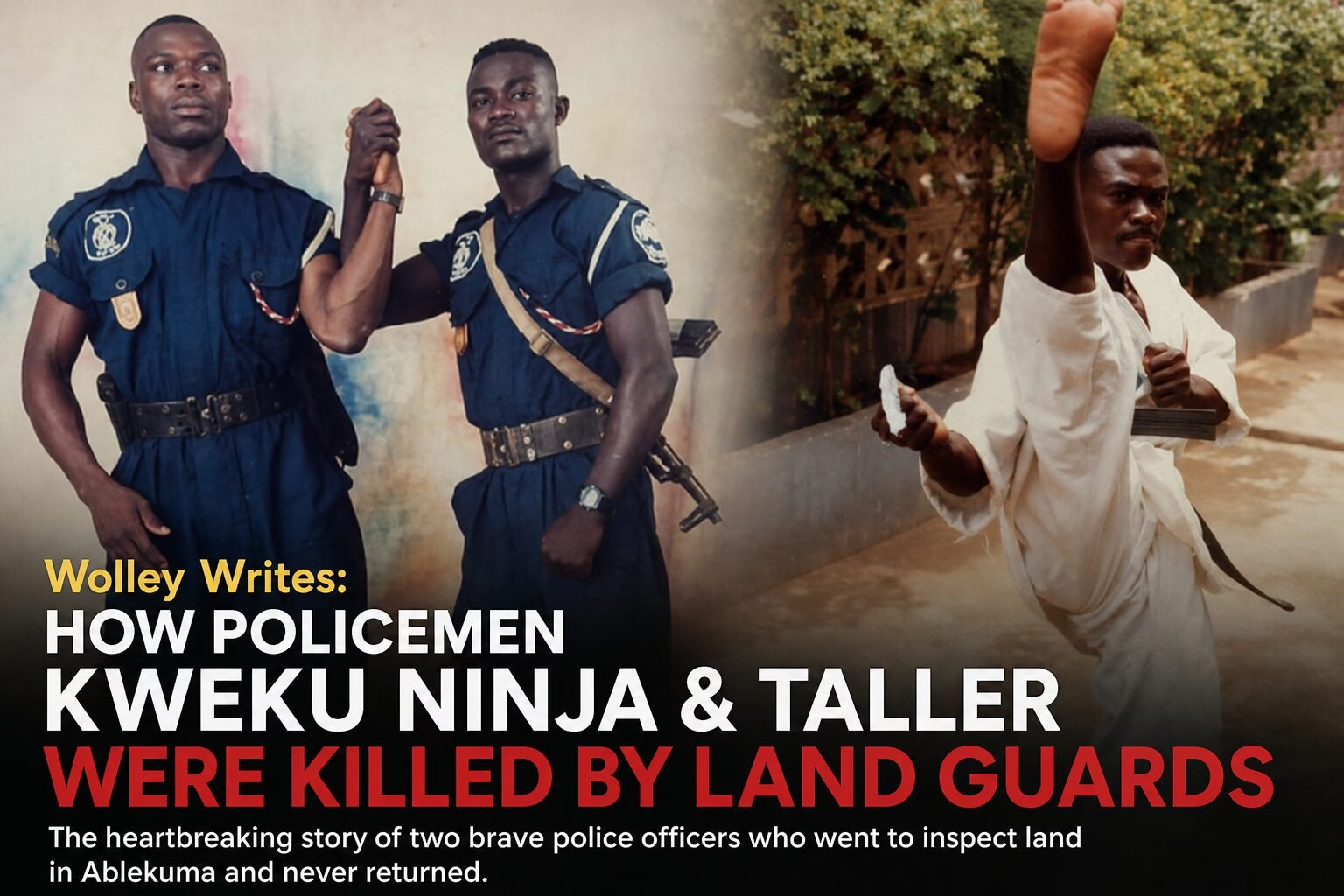
In Ghana, one such tragedy was the brutal killing of two police officers popularly known as Kweku Ninja and Taller. Their deaths in 1998 shocked the nation, dominated newspaper headlines, and exposed the dangerous power of land guards operating in parts of Accra.
Even decades later, many Ghanaians still remember the names Kweku Ninja and Taller. To some, they were courageous policemen. To others, they were symbols of a country struggling to control organized violence linked to land disputes. Their story remains one of the darkest chapters in Ghana’s criminal history.
Who Was Kweku Ninja?
Kweku Ninja was not an ordinary police officer. Before his tragic death, he was already a familiar face to many households across Ghana. His real name was Richard Osuseche, but the public knew him as Kweku Ninja because of his martial arts skills and television appearances.
He was born in 1972 and grew up largely in the Teshie-Nungua and Dansoman areas of Accra. He attended Wesley Grammar School before later enrolling at Accra Academy. It was during his school years that his passion for martial arts became more serious.
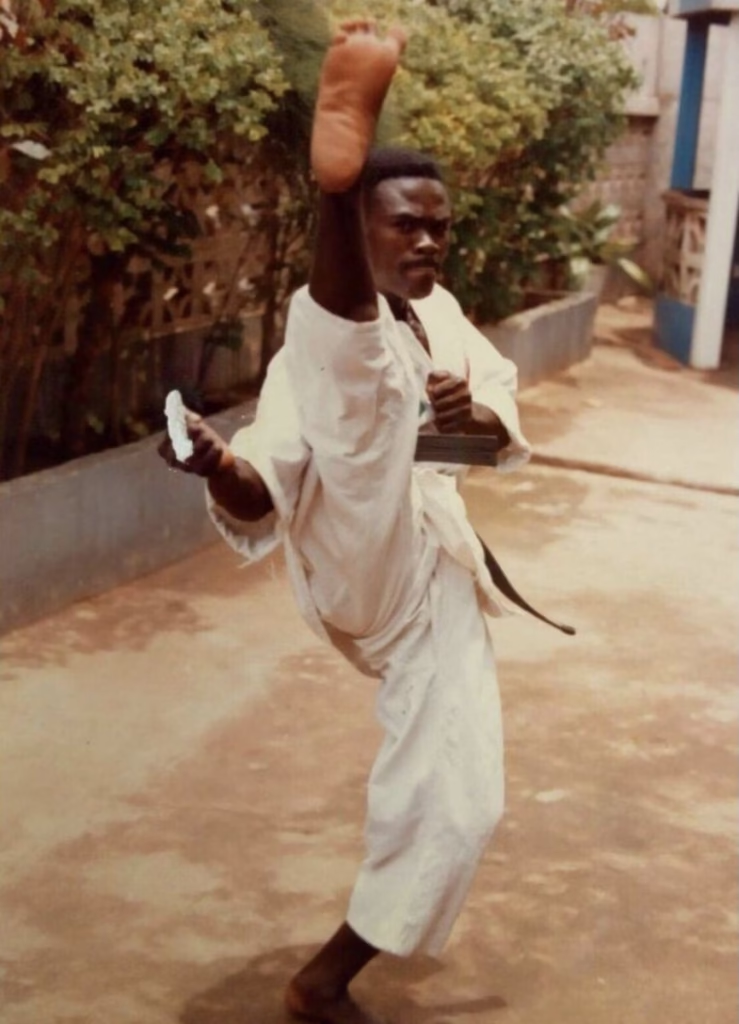
At a time when martial arts films and self-defense culture were gaining popularity, Ninja became deeply involved in Taekwondo and Karate. He trained regularly and built a reputation for discipline, speed, and courage. Though he was said to be small in stature, he was fearless and physically strong.
His nickname “Ninja” reportedly came from an older colleague or senior who was first known by that title. Over time, Richard Osuseche adopted the name and made it famous.
Many older Ghanaians remember seeing him on GTV, where he appeared in martial arts demonstration programs. Wearing a white uniform, he would showcase kicks, punches, acrobatics, and combat drills. For young viewers, he became a local action hero.
Joining the Ghana Police Service
In 1996, Kweku Ninja joined the Ghana Police Service. It was during a period when the police administration was introducing special operational teams to fight crime and restore order. One of these units was the Striking Force, created under then Inspector General of Police, Peter Nanfuri.
Because of his martial arts background, Ninja was recruited into the unit. He quickly gained attention among officers due to his discipline, fitness, and fighting ability. His public fame also made him one of the most recognized officers of the time.
It was within the Police Service that he became close friends with another officer known as Taller.
Who Was Taller?
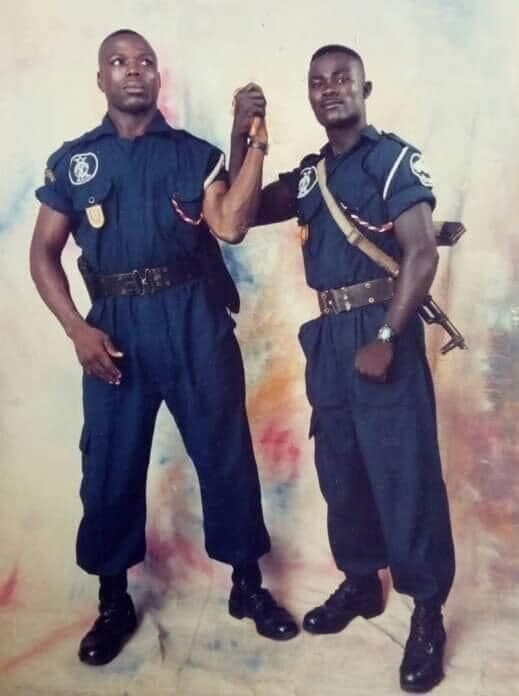
Taller, whose real name was Jeriwono, was another constable in the Ghana Police Service. He became popularly known as Taller because of his height. While Ninja was short and compact, Taller was physically imposing and tall.
The contrast between the two men made them memorable wherever they went. Colleagues often referred to them together because they were always seen as a pair. One was short and fast. The other was tall and commanding. Their friendship became one of the best-known partnerships within their unit.
Though less publicly famous than Ninja, Taller was respected by those who knew him. He was described as loyal, brave, and always ready to support his friend.
Ablekuma in the 1990s
To understand what happened next, one must understand the environment of Ablekuma in the late 1990s.
Today, Ablekuma is a busy and heavily populated part of Accra. But in 1998, much of the area was still developing. Several parts were bushy, isolated, and loosely controlled. Land ownership disputes were common as the city expanded and more people sought property.
Where there were land disputes, land guards often followed.
Land guards were violent groups hired by individuals, families, or syndicates to seize, defend, or control land. They used intimidation, beatings, threats, and sometimes deadly weapons. In many areas, they were feared more than respected authorities.
By the late 1990s, reports suggested that parts of Ablekuma had become hotspots for such groups.
The Dispute Over Ninja’s Land
According to accounts, Kweku Ninja owned or had interest in a piece of land in Ablekuma. He reportedly complained to colleagues that land guards were troubling him over the property.
He was said to be frustrated by repeated interference and wanted to visit the land personally. Some accounts suggest he intended to inspect the site and erect pillars to mark the boundaries clearly.
Friends reportedly advised caution. Others suggested waiting to go with a larger police team or informing superiors officially.
But Ninja decided to act.
Taller chose to go with him.
The Journey That Never Returned
On 23rd November 1998, the two officers set out for Ablekuma in a white Mazda vehicle reportedly used for operations. They were armed with courage, confidence, and perhaps the belief that their status as policemen would protect them.
They arrived in the afternoon.
At first, they were believed to be inspecting the land quietly. But within moments, trouble emerged.
Men began appearing from nearby bushes. First two. Then more. Before long, a crowd had surrounded them.
The officers had walked into a trap.
Taller Was Shot Dead
As tension rose, violence broke out. During the confrontation, Taller was reportedly shot directly and died at the scene.
His death was immediate and devastating.
For Ninja, the situation became a desperate fight for survival.
Ninja’s Last Attempt to Escape
Ninja was known for martial arts. In the chaos, he reportedly fought back fiercely. Using his training, he managed to break free from some of the attackers and started running.
He saw a moving tipper truck carrying sand and tried to climb onto it to escape.
But another attacker was allegedly already inside the truck.
That man reportedly struck Ninja with a stick as he attempted to board. The blow caused him to fall back to the ground.
The mob then caught up with him.
What followed was savage. He was beaten mercilessly and overpowered by the attackers.
The two officers had now fallen into the hands of land guards.
The Missing Policemen Case
When Ninja and Taller did not return, concern quickly spread within the Police Service. Their colleagues knew something was wrong.
Rumours circulated that they had gone to Ablekuma over a land matter.
Soon, newspapers carried stories about two missing policemen. Public interest grew because Kweku Ninja was already a known personality.
How could two officers disappear so suddenly?
How could police officers go missing in broad daylight?
The case embarrassed authorities and terrified the public.
Fear and Silence in Ablekuma
Investigators soon focused on Ablekuma. But there was a major problem.
Locals were afraid.
The land guard groups reportedly had influence in the area. Witnesses feared retaliation. Many refused to speak. Others claimed ignorance.
This silence slowed the investigation and increased public anger.
Eventually, the police decided force was necessary.
Major Police Raids
In early December 1998, police launched raids in Ablekuma. Large numbers of officers entered the area, arrested suspects, and searched for evidence.
More raids followed days later.
Reports suggested that dozens of people were rounded up. Some were suspected gang members. Others may have been ordinary residents caught in the sweep.
The police were under enormous pressure. Two officers had vanished. The nation demanded answers.
Breakthrough Witness
A young boy reportedly became key to the investigation.
He claimed to have seen parts of the attack and identified some of the men involved. His testimony reportedly gave police names linked to the land guard syndicate.
Several suspects were then pursued and arrested.
The walls of silence were beginning to crack.
Discovery of Taller’s Body
Search teams eventually found Taller’s body near a stream or waterlogged area.
The discovery confirmed what many had feared: the missing officers had been murdered.
But one painful question remained.
Where was Kweku Ninja?
Search for Ninja’s Body
Police continued searching for weeks. Suspects allegedly gave conflicting directions and false information.
Some said his body was in one location. Others claimed another.
Eventually, in January 1999, searchers found his remains buried beneath concrete inside an uncompleted building.
Reports said parts of his body had been severed and scattered. His face had been badly smashed.
The brutality horrified the nation.
It was not just murder. It was cruelty designed to erase a man.
National Shock and Outrage
The killings triggered outrage across Ghana.
If armed criminals could kill policemen so brutally, what chance did ordinary civilians have?
Citizens demanded stronger action against land guards. Editorials condemned the spread of lawlessness. Many mourned Ninja not only as an officer but as a public figure they had admired on television.
For Taller, many saw a loyal friend who died standing beside his colleague.
The Trial
Eventually, several suspects were brought before the courts.
After legal proceedings, some accused persons were convicted in connection with the murders. Others were acquitted for lack of sufficient evidence.
Those convicted were sentenced to death by hanging, which was then still part of Ghana’s legal framework.
However, Ghana has not carried out executions for many years, meaning such sentences were unlikely to be implemented.
The Legacy of the Case
The deaths of Ninja and Taller became more than a criminal case. They became a symbol.
They symbolized:
- The danger of land disputes without proper legal systems
- The rise of violent private gangs
- Weaknesses in law enforcement response
- The risks officers face beyond normal duty
- How fear can silence communities
Their case also strengthened calls for government action against land guards, an issue Ghana continues to battle even today.
Remembering Kweku Ninja
For many who grew up in the 1990s, Kweku Ninja remains unforgettable.
He was a policeman.
He was a martial artist.
He was a television personality.
He was a man many children admired.
His death felt personal to the public because he was already part of their homes through TV screens.
Remembering Taller
Though less famous publicly, Taller deserves equal remembrance.
He accompanied a friend into danger. He did not run from duty. He stood beside Ninja until the end.
That loyalty should never be forgotten.
Final Thoughts
The murders of Kweku Ninja and Taller remain one of Ghana’s most chilling crime stories. It showed how dangerous land guard violence had become and how even state officers could become victims.
Their story is tragic, but it must be remembered.
Not for fear alone.
But as a warning that justice delayed, weak enforcement, and tolerated violence can grow into national shame.
Kweku Ninja and Taller went to inspect land.
They never came back.
And Ghana has never forgotten.