|
Getting your Trinity Audio player ready...
|
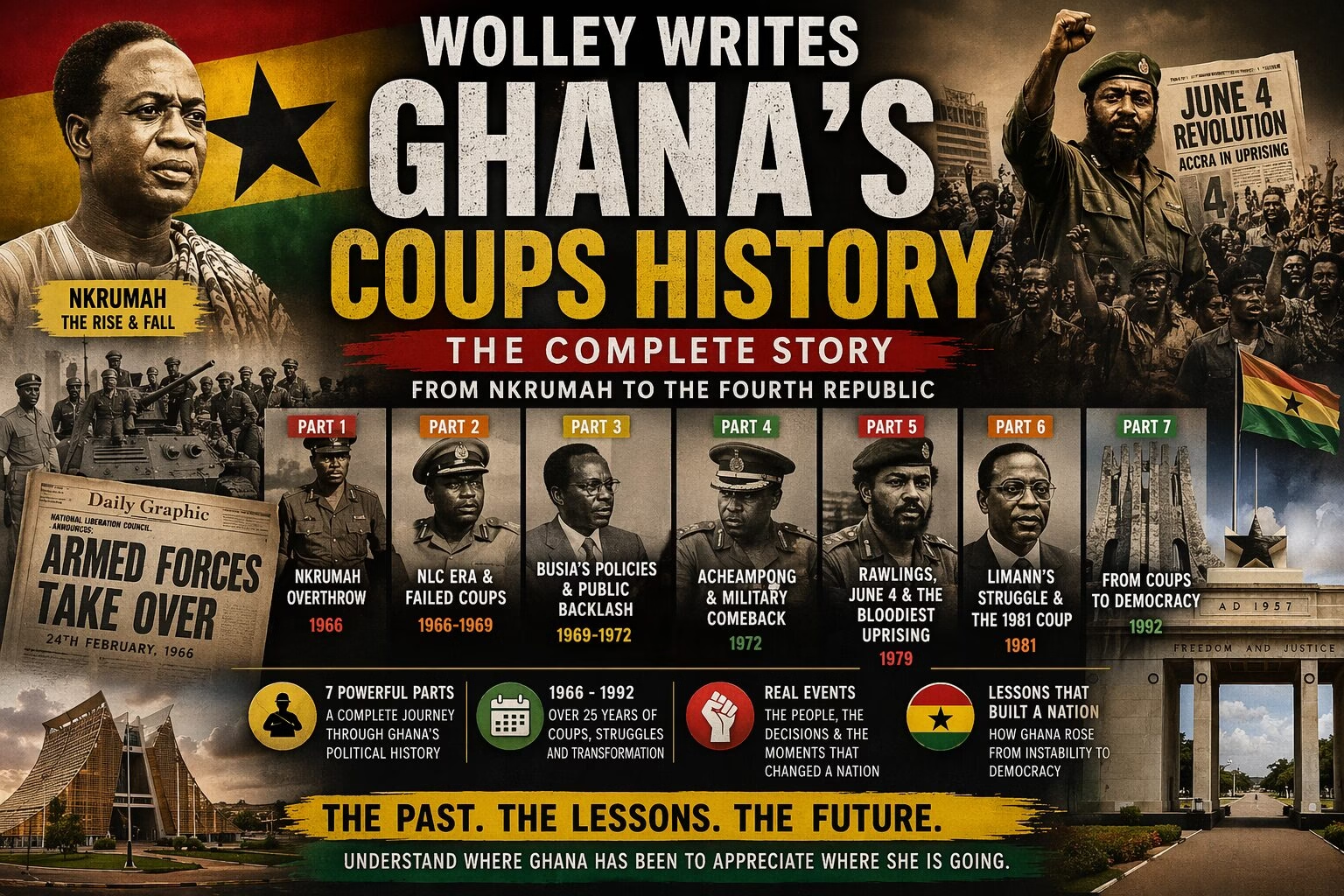
Ghana’s political history is deeply marked by a series of military coups that shaped its governance, economy, and national identity. From the overthrow of Kwame Nkrumah in 1966 to the rise of Jerry John Rawlings in the late 1970s and early 1980s, the country experienced cycles of instability, reform, and transition between military and civilian rule.
This article explores Ghana’s coups in detail, highlighting the motivations, key actors, and consequences that defined each era.
The Fall of Kwame Nkrumah (1966)
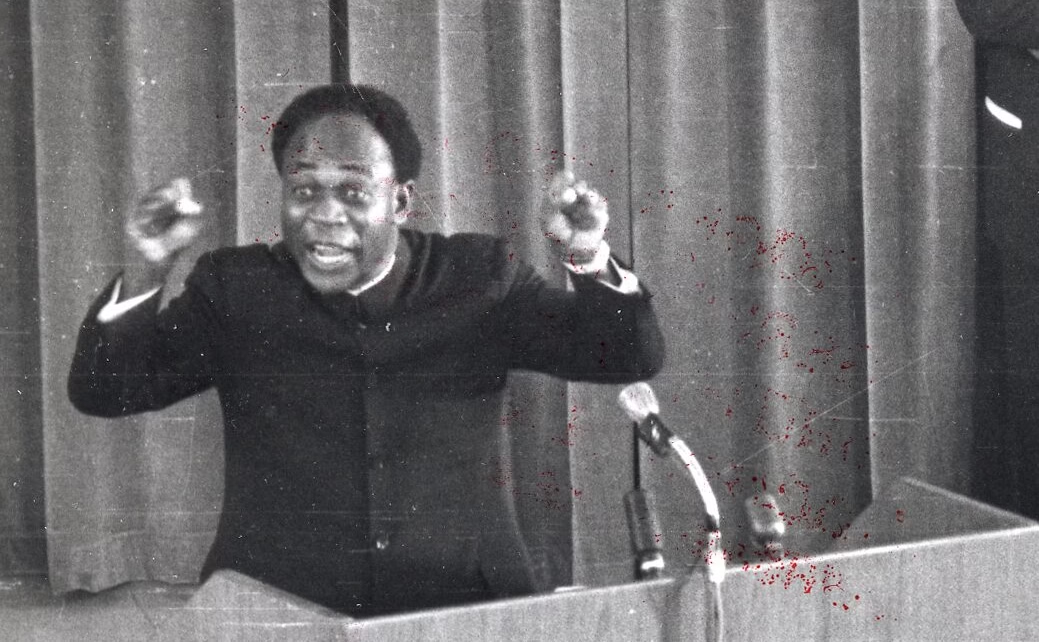
After leading Ghana to independence in 1957 and becoming president in 1960, Kwame Nkrumah implemented ambitious development policies. His administration established major institutions such as the Bank of Ghana, the Akosombo Dam, and several state-owned industries.
However, his rule gradually took an authoritarian turn. The Preventive Detention Act of 1958 allowed the government to detain individuals without trial, creating widespread fear. In 1964, Ghana became a one-party state, and Nkrumah declared himself president for life.
These actions, combined with economic challenges such as falling cocoa prices and rising national debt, led to growing dissatisfaction.
On February 24, 1966, while Nkrumah was on a diplomatic trip to Vietnam and China, a group of military officers, police officials, and civilians overthrew his government. This marked Ghana’s first coup.
The coup leaders formed the National Liberation Council (NLC), arresting hundreds of Nkrumah’s associates and dismantling his political structures. While many citizens initially welcomed the change, the new regime soon faced economic difficulties and labor unrest.
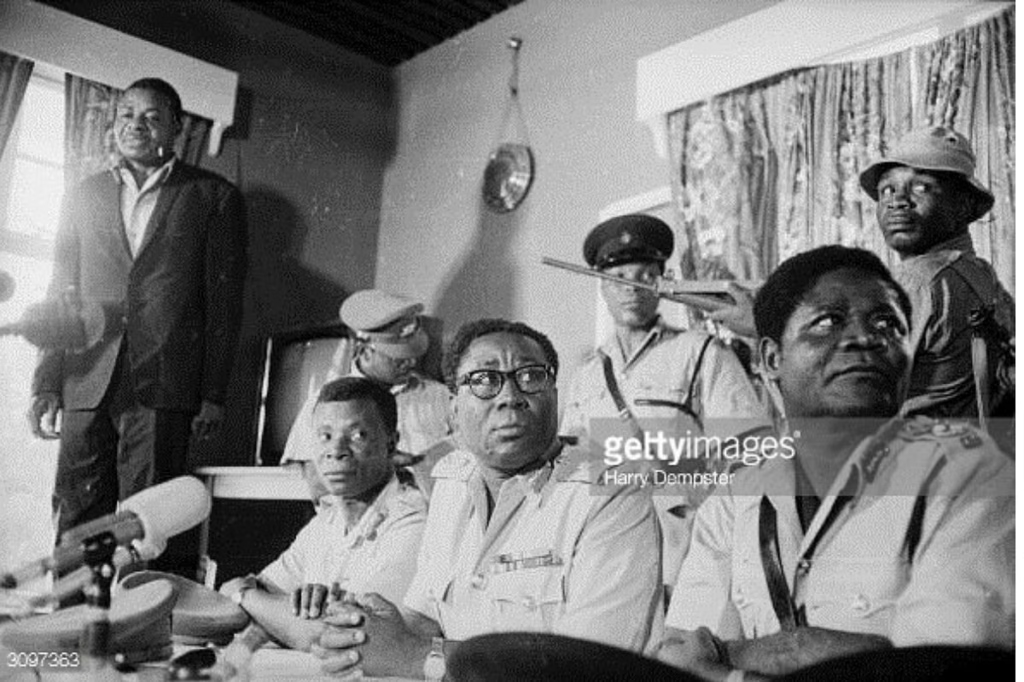
Instability Under the National Liberation Council
The NLC struggled to stabilize the country. Between 1966 and 1969, Ghana experienced numerous strikes and economic challenges. Workers protested declining living standards, and the government faced mounting pressure.
In 1967, a failed coup attempt known as “Operation Guitar Boy” took place. The plotters briefly seized control of the national broadcaster and announced a takeover but were quickly suppressed. The leaders of the attempt were executed, demonstrating the regime’s intolerance for dissent.
The period also saw internal conflicts within the military leadership, including corruption allegations that led to the resignation of key figures.
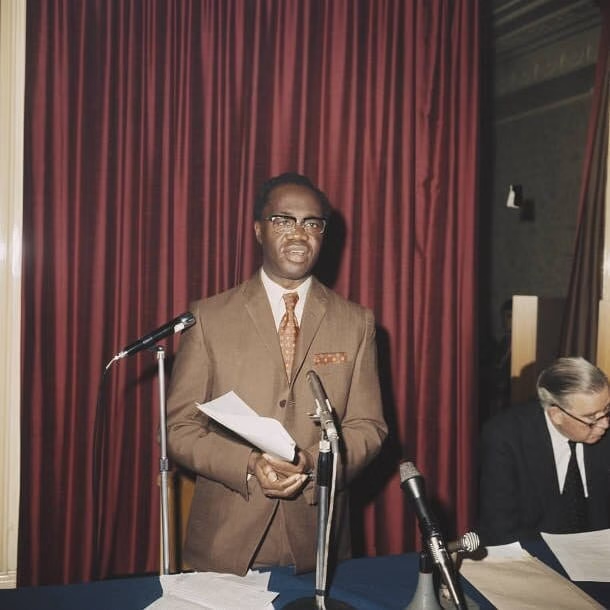
Return to Civilian Rule: Busia’s Government (1969–1972)
In 1969, Ghana transitioned back to civilian rule through elections. Dr. Kofi Abrefa Busia became Prime Minister under a parliamentary system.
Busia introduced significant policies aimed at economic reform, but some proved highly controversial.
One of his most debated decisions was the Aliens Compliance Order, which led to the expulsion of hundreds of thousands of foreign nationals, particularly Nigerians. While intended to protect Ghanaian jobs, it disrupted businesses and strained regional relations.
Busia also devalued the Ghanaian currency to address economic imbalances. Although the policy aimed to boost exports, it increased the cost of living and sparked public dissatisfaction.
Additionally, his dismissal of hundreds of public servants—an event popularly known as the “Apollo 568”—further fueled unrest.
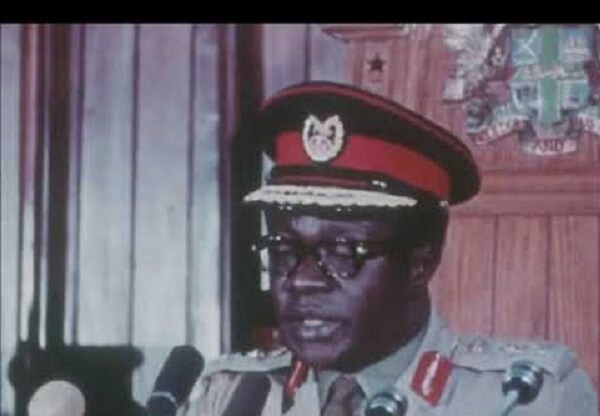
The 1972 Coup: Acheampong Takes Over
On January 13, 1972, Colonel Ignatius Kutu Acheampong led a military coup that overthrew Busia’s government while he was abroad.
Acheampong established the National Redemption Council (NRC), later renamed the Supreme Military Council (SMC). His regime initially gained support by reversing unpopular policies like currency devaluation.
However, economic mismanagement, corruption, and declining living conditions soon eroded public trust. By the late 1970s, Ghana faced severe economic hardship, shortages, and growing dissatisfaction.
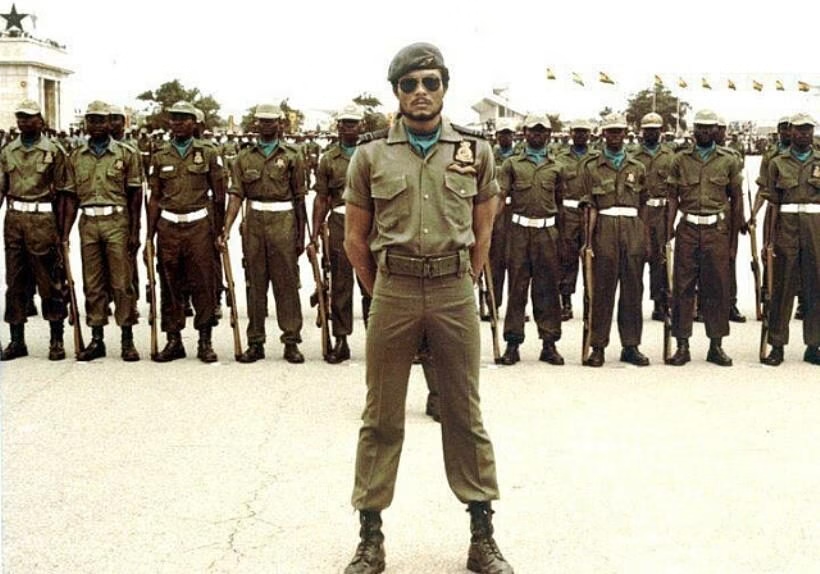
The Rise of Rawlings and the June 4 Uprising (1979)
In May 1979, a young air force officer named Jerry John Rawlings attempted a coup against the SMC. The attempt failed, and he was arrested.
During his public trial, Rawlings openly criticized the military leadership for corruption and mismanagement. His bold stance resonated with many Ghanaians, especially junior military officers and the general public.
On June 4, 1979, Rawlings was freed by fellow officers, and a successful coup was launched. The uprising, known as the June 4 Revolution, was one of the most violent in Ghana’s history.
The Armed Forces Revolutionary Council (AFRC) was formed, with Rawlings as its chairman. The regime carried out a “house-cleaning exercise,” executing several former heads of state and senior military officers accused of corruption.
These executions remain one of the most controversial aspects of Ghana’s coup history.
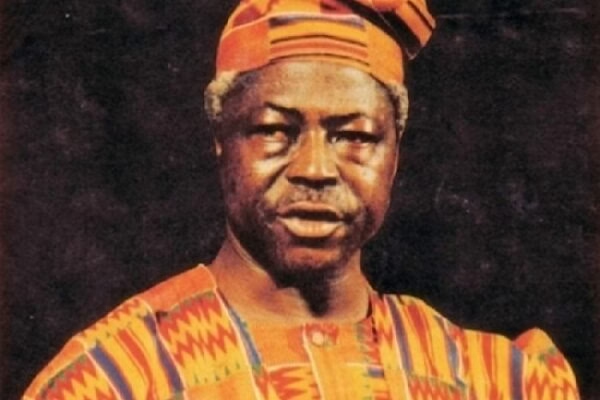
Transition to Civilian Rule: Limann’s Presidency (1979–1981)
Despite its radical actions, the AFRC handed power over to a civilian government later in 1979. Dr. Hilla Limann became president after democratic elections.
However, Limann’s government inherited a fragile economy and a politically unstable environment. Inflation soared, shortages persisted, and public frustration grew.
Although Rawlings had stepped down, he remained influential and continued to position himself as a voice for ordinary Ghanaians.
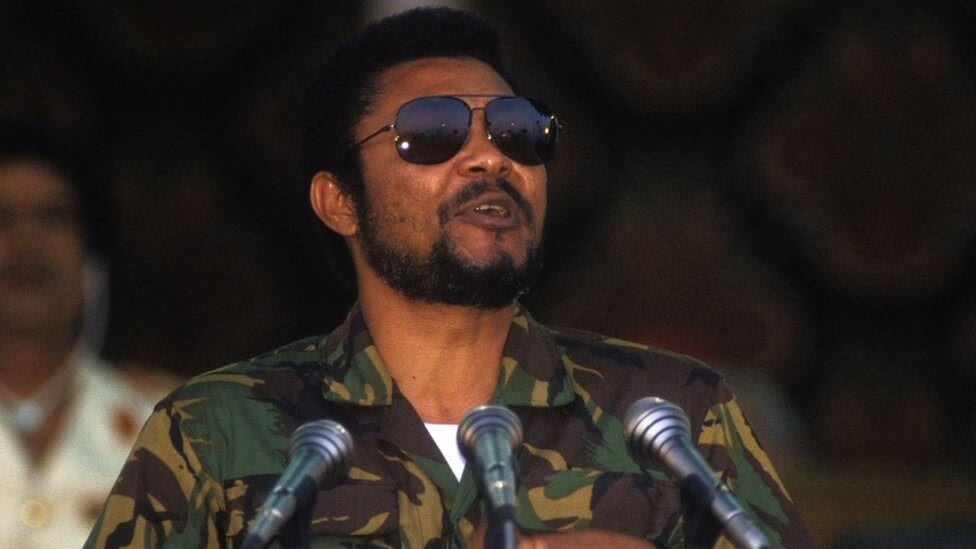
The 1981 Coup: Rawlings Returns
On December 31, 1981, Rawlings staged another coup, overthrowing Limann’s government. This marked the beginning of a new era under the Provisional National Defence Council (PNDC).
Rawlings justified the coup as necessary to restore discipline, fight corruption, and rebuild the economy. His regime initially adopted revolutionary policies but later shifted toward economic reforms and structural adjustment programs.
Impact of Ghana’s Coups
Ghana’s repeated coups had profound consequences:
- Political Instability: Frequent changes in leadership disrupted governance and weakened institutions.
- Economic Challenges: Policies were often inconsistent, leading to inflation, debt, and reduced investor confidence.
- Social Division: Families and communities were divided based on political affiliations and past experiences.
- Human Rights Concerns: Arrests, executions, and suppression of dissent marked several regimes.
At the same time, these events also shaped Ghana’s eventual commitment to democracy.
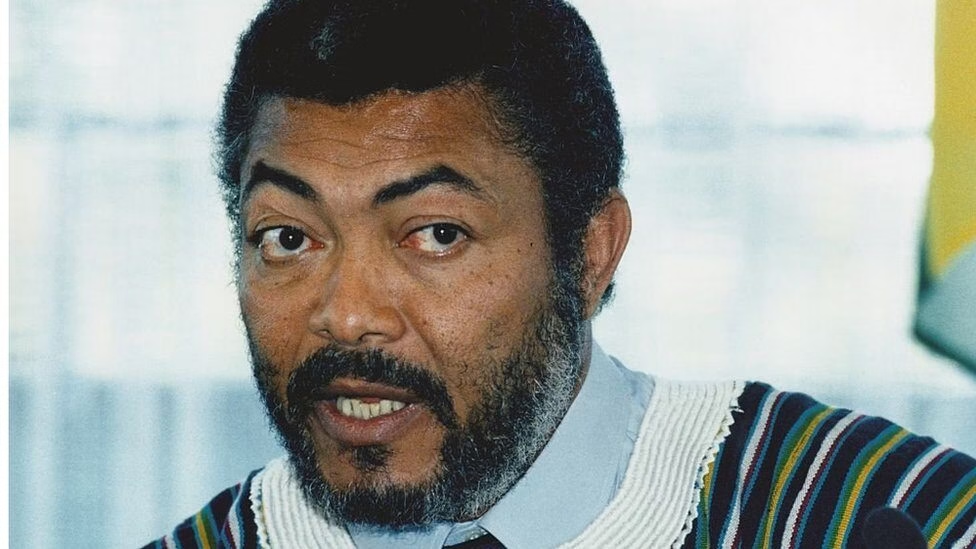
From Military Rule to Stable Democracy
By the early 1990s, Ghana began transitioning toward stable democratic governance. Rawlings himself eventually oversaw the return to constitutional rule in 1992, marking the beginning of the Fourth Republic.
Today, Ghana is widely regarded as one of Africa’s most stable democracies—a remarkable transformation from its turbulent past.
Ghana’s coup history is a story of ambition, conflict, and resilience. From Nkrumah’s overthrow to Rawlings’ revolutionary era, each phase reflects the challenges of nation-building in a post-colonial state.
Understanding this history is essential not only for appreciating Ghana’s democratic progress but also for recognizing the lessons learned from decades of political upheaval.
Author – Richard Kobby Wolley