The Arab slave trade lasted over lasted for over 1,300 years, hard a profound lasting impacts on the demographic, social and cultural landscapes of the affected regions…
The Arab trade, particularly in the context of slavery, was a vast and complex enterprise that involved the capture and sale of millions of individuals over more than 1,300 years, from the 7th century to the 20th century.
This extensive trade predominantly involved people from the eastern regions of Africa, various parts of Europe, and diverse areas throughout the Middle East and northern Africa.
Its consequences were profound, significantly influencing the demographic, social, and cultural landscapes of the affected regions.
Throughout this period, countless individuals were forcibly taken from their homelands, often through a combination of warfare, raiding, and a sophisticated network of trade.
This brutal practice led to the transportation of individuals across vast distances, creating major demographic shifts within communities.
The movement of these people not only facilitated a significant exchange of goods, such as spices, textiles, and precious metals, but also resulted in the blending of cultures, which included the sharing and diffusion of ideas, languages, and religions.
The Arab slave trade was marked by its inherent complexity, reflected in the diverse methods used for the capture, transport, and sale of enslaved individuals.
Many of those who were enslaved came from various backgrounds, including ethnic groups such as Bantu speakers from East Africa, Berbers from North Africa, and various peoples of the Arabian Peninsula.
This rich tapestry of ethnicities and cultures led to the creation of unique cultural fusions that influenced societies across the Middle East and North Africa.
Additionally, the trade established intricate networks and routes that connected disparate regions.
It fostered interactions not just among traders and sellers, but also among communities that might not have otherwise engaged with each other.
These interactions had lasting implications for the socio-economic structures of local communities, reshaping livelihoods, social hierarchies, and economic practices.
The repercussions of the Arab slave trade became deeply ingrained in the social fabric of the societies involved.
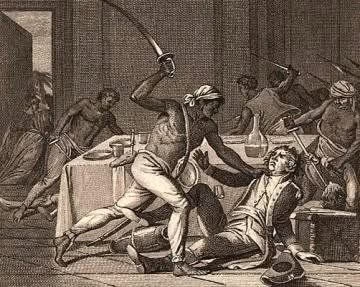
The dynamics of power, class, and identity experienced significant changes as communities adapted to the presence of enslaved individuals.
These adjustments led to the integration of various cultural elements into established traditions, creating pluralistic societies in many areas where the trade was prominent.
Furthermore, the legacy of this extensive trade continues to resonate today, shaping the identities and historical narratives of the peoples and regions profoundly affected by it.
The social dynamics, cultural exchanges, and complexities introduced during this prolonged period still play a critical role in contemporary discussions about heritage, identity, and the ongoing impact of historical injustices.
Understanding this legacy is essential to appreciating the complexities of modern societies that emerged from the intricate web of the Arab trade.