
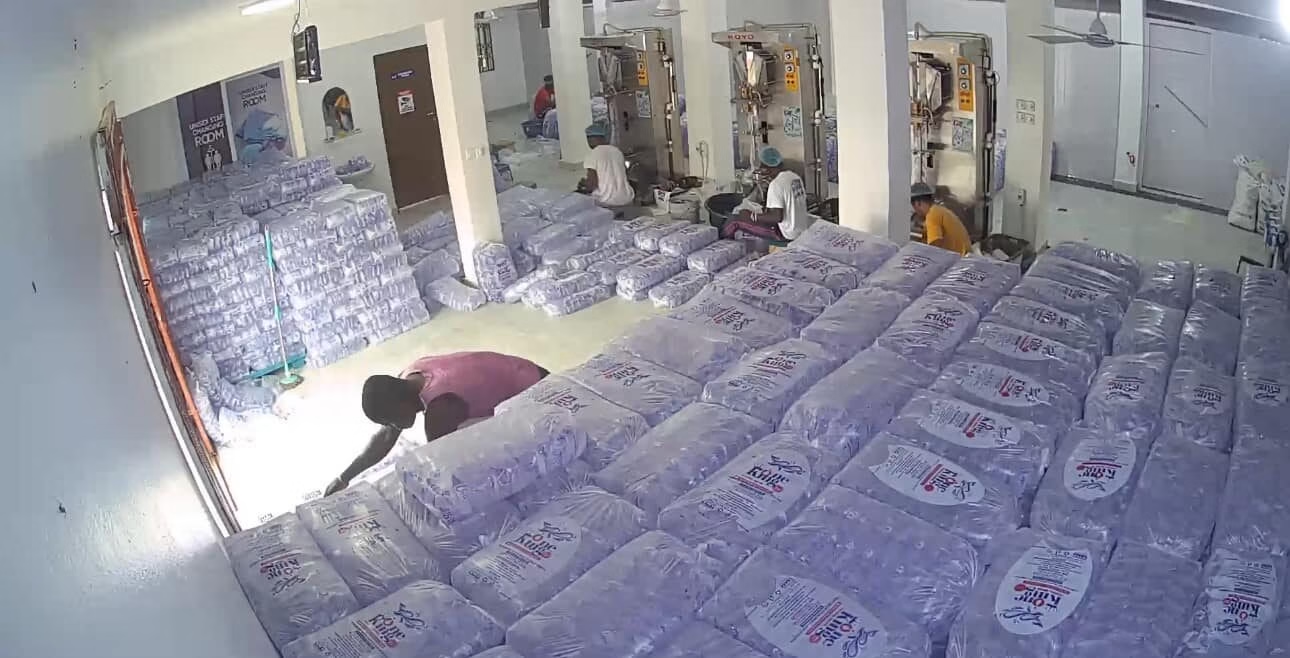
Consumers of sachet water in Ghana are set to pay more from Monday, April 6, 2026, following a price adjustment announced by the National Association of Sachet and Packaged Water Producers.
In a statement released on April 2, the association explained that the increase is driven by rising production costs, largely due to a global shortage of polymers—the key material used in sachet packaging—alongside supply disruptions linked to geopolitical tensions, including the ongoing conflict involving Iran.
Under the new pricing structure, the ex-factory price has been set at GH¢8 per bag of 500ml sachets (30 pieces), the ex-truck price at GH¢10, and the maximum retail price at GH¢15 per bag.
The association has urged retailers and distributors across the country to comply with the approved pricing to ensure fairness and consistency in the market.
According to NASPAWAP, the surge in polymer prices has significantly increased operational costs for producers, making it difficult to maintain existing prices.
The global shortage of raw materials has disrupted supply chains and placed additional financial pressure on manufacturers within the sachet water industry, which remains a key provider of affordable drinking water for millions of Ghanaians.
The price hike is expected to affect households, particularly in urban areas where sachet water—commonly referred to as “pure water”—is consumed daily.

Small-scale retailers and vendors are also likely to feel the impact as they adjust to the new price margins while trying to sustain their businesses.
With the rising cost of living already a concern, the increase may further strain the budgets of low- and middle-income earners who depend on sachet water as a primary source of drinking water.
Despite the concerns, NASPAWAP emphasised that the adjustment is necessary to sustain the industry under current economic conditions.
The association reiterated its commitment to working with stakeholders to maintain a balanced market that protects both producers and consumers.
The development highlights the broader challenges facing local industries that rely heavily on imported raw materials, as global economic pressures continue to influence domestic pricing.