
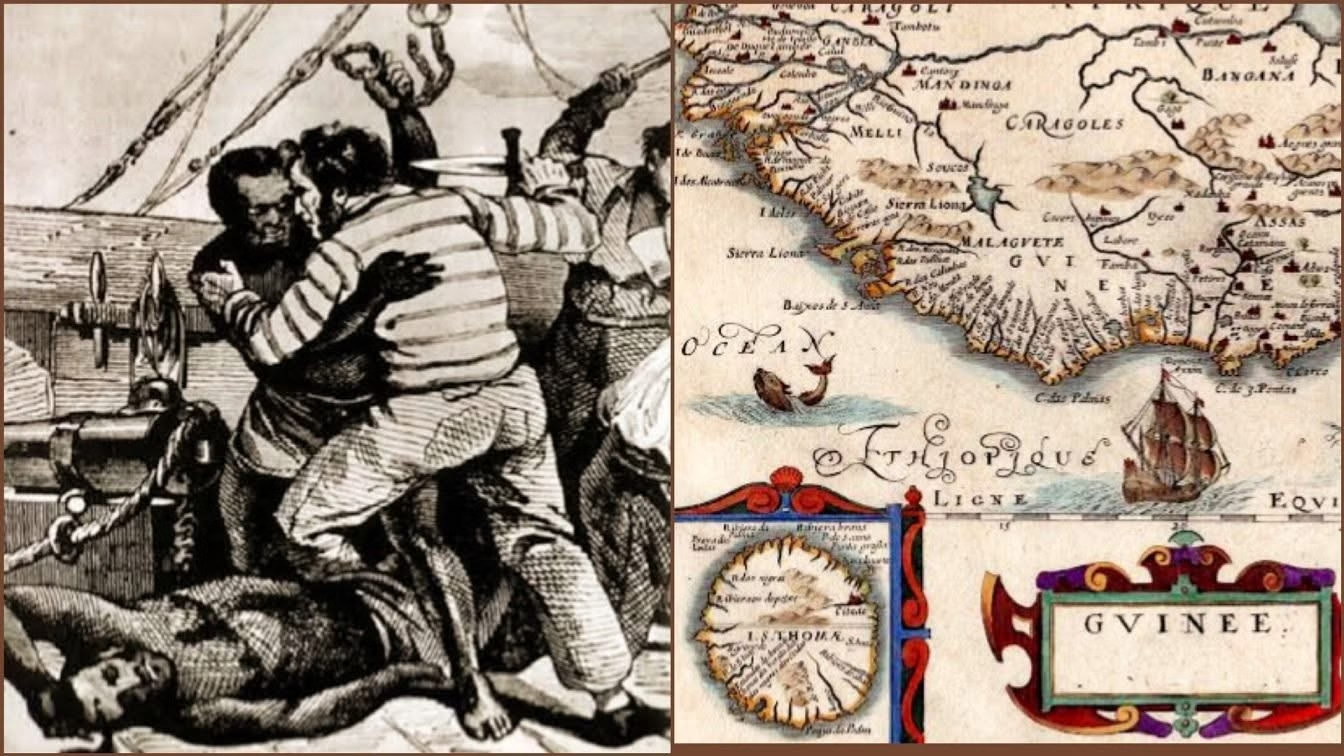
In June 1730, something anyone can call a mystery happened on a ship carrying enslaved Africans across the deep oceans to an Island in Europe, with no knowledge, they fought back and returned to Africa
The Little George Ship Revolt occurred in June 1730 aboard the British vessel Little George, and it stands as a remarkable yet often overlooked episode in the history of maritime uprisings among enslaved Africans.
This revolt is noted for being one of the few successful insurrections of its kind that transpired on the open seas.
The events unfolded shortly after the Little George set sail from the Coast of Guinea, tasked with transporting a group of ninety-six captured Africans to the British North American colony of Rhode Island, where they were intended to be sold into slavery.
On June 1, 1730, Captain George Scott embarked on the journey from the Bonnana Islands, a region known for its involvement in the transatlantic slave trade.
The ship was overwhelmed with a cargo of human lives, packed tightly into cramped quarters on the lower deck, where inadequate ventilation and poor conditions exacerbated their suffering.
The captives endured relentless mistreatment at the hands of the crew, who exhibited little regard for their well-being.
Five days into the arduous Atlantic crossing—an oppressive journey marked by both physical and psychological torment—the captives decided to take decisive action. At approximately 4:00 a.m. on June 6, they orchestrated a daring escape.
Several individuals managed to free themselves from their heavy iron shackles and broke through a bulkhead, creating a breach that would allow them access to the upper deck.
Once on deck, the newly liberated captives seized their opportunity. Armed with makeshift weapons, they swiftly overwhelmed three watchmen who were on duty, eliminating the immediate threat to their rebellion.
Among the tactics employed was the creation of a makeshift bomb, crafted from gunpowder packed into a bottle.
This weapon served as a crucial negotiating tool, as they threatened to ignite it, creating the risk of catastrophic damage to the ship and jeopardizing the lives of everyone aboard.
Faced with the prospect of destruction, the remaining crew members recognized their predicament.
The crew ultimately capitulated, surrendering to the determined and desperate African captives who had now claimed control over the vessel.
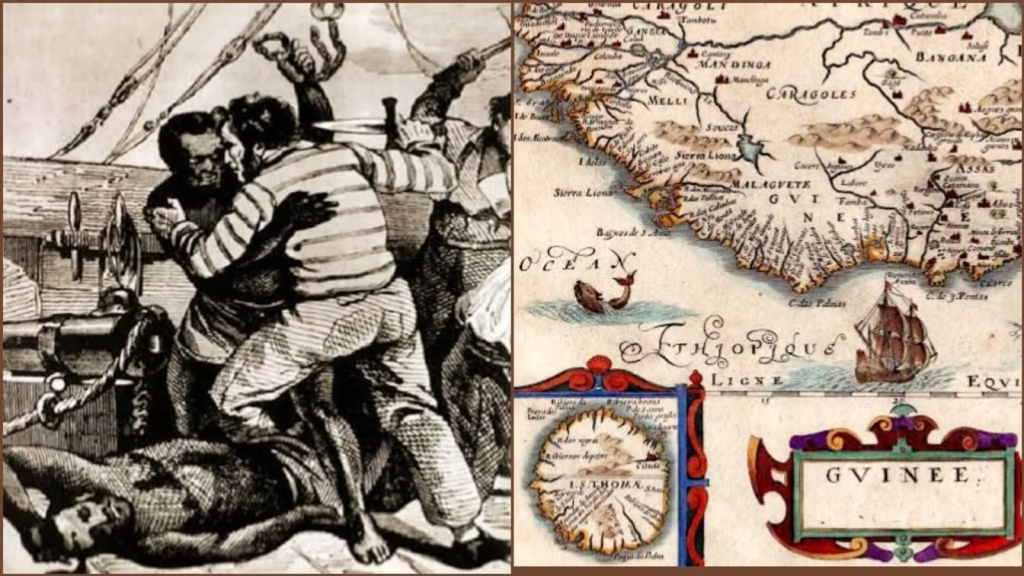
Despite having no prior experience in sailing or navigation, the former captives demonstrated remarkable resilience and ingenuity.
They managed to turn the ship around and set a course back to Africa, navigating their way toward the Sierra Leone River.
After several tense days at sea, the Little George reached the mouth of the Sierra Leone River.
There, both the captives and the British crew abandoned the ship, recognizing it was time to leave behind the vessel that had been a site of such trauma.
Following their departure, the enslaved Africans were eventually rescued by another slave ship, finding themselves once again caught in the turbulent world of the transatlantic slave trade.
Captain George Scott later recounted the harrowing details of the revolt, offering an account that would serve as an enduring record for future generations.
His narrative underscores not only the bravery and determination of the captives but also highlights the complexities of the human spirit in the face of unimaginable adversity.