|
Getting your Trinity Audio player ready...
|
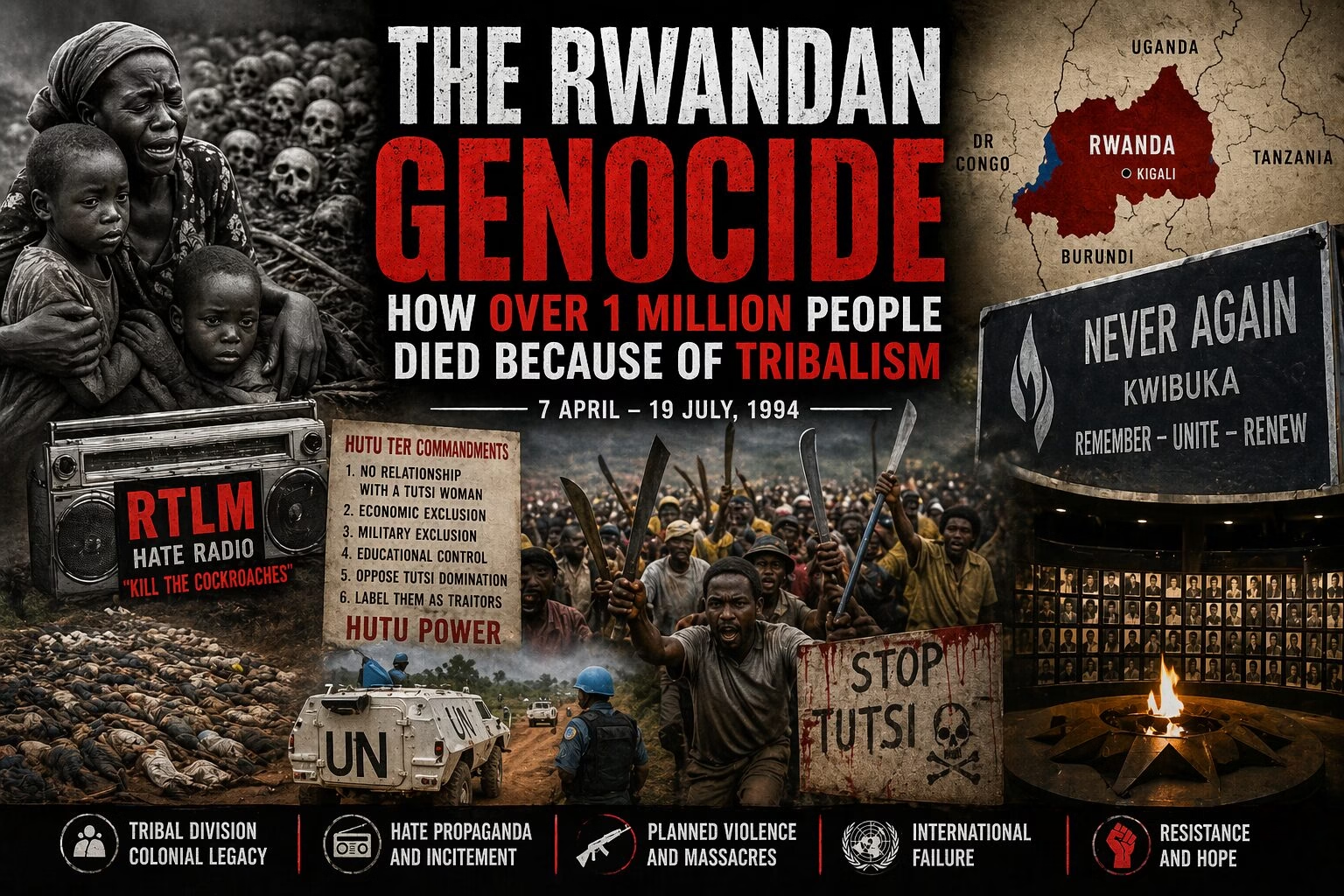
The 1994 Rwandan Genocide remains one of the darkest chapters in modern African history—a tragic reminder of how deep-rooted division, propaganda, and political manipulation can spiral into unimaginable violence.
In just over 100 days, more than one million people were brutally killed, not by foreign invaders, but by their own neighbors.
To understand how Rwanda reached this point, one must go back decades before the genocide itself.
Rwanda’s population was primarily made up of three groups: the Hutu majority, the Tutsi minority, and the Twa, who made up a very small percentage.
During colonial rule under Belgium, the Tutsis were favored and placed in positions of power, ruling through a monarchy.
This created long-standing resentment among the Hutus, who felt marginalized in their own country.
By 1959, tensions exploded into what became known as the Rwandan Revolution.
The Hutus overthrew the Tutsi monarchy, forcing many Tutsis to flee into neighboring countries as refugees.
Over the years, these exiled communities grew, and with them, a desire to return home.
This desire led to the formation of the Rwanda Patriotic Front (RPF), largely made up of Tutsi refugees, many of whom had lived in Uganda.
In 1990, the RPF launched an invasion into Rwanda, marking the beginning of the Rwandan Civil War.
Though initially unsuccessful, the group regrouped under the leadership of Paul Kagame and continued their efforts.
By 1993, after years of conflict, a peace agreement known as the Arusha Accord was signed in Tanzania.
It aimed to integrate the RPF into Rwanda’s political system and bring an end to the war.
The United Nations deployed peacekeepers under the UNAMIR mission to maintain stability.
However, peace on paper did not reflect reality on the ground.
Extremist Hutu factions strongly opposed the agreement. They promoted an ideology known as “Hutu Power,” which portrayed Tutsis as enemies and even less than human.
This ideology was spread through media, most notably a radio station that broadcast hate speech daily, encouraging violence and referring to Tutsis as “cockroaches.”
At the center of this propaganda machine was Félicien Kabuga, a wealthy businessman who funded both the media campaigns and the distribution of weapons, including machetes, to civilians.
What followed was not spontaneous violence, but a carefully prepared campaign of extermination.
The turning point came on April 6, 1994, when a plane carrying Rwanda’s president, Juvénal Habyarimana, was shot down near Kigali. Within hours, roadblocks were set up, and the killings began.
The genocide started on April 7, 1994.
Hutu militias, particularly the Interahamwe, alongside elements of the national army, began systematically targeting Tutsis and moderate Hutus.
Identification cards were used to determine ethnicity, sealing the fate of countless individuals at checkpoints.
Homes were invaded. Families were slaughtered. Entire communities were wiped out.
Even places that should have been safe—churches, schools, and hospitals—became sites of mass murder.
In some cases, thousands of people seeking refuge were killed in a single location. The violence was intimate and brutal, often carried out with machetes and simple weapons.
The international response was widely criticized. Despite early warnings, the United Nations peacekeeping forces were limited in their mandate and unable to intervene effectively.
After several Belgian soldiers were killed, Belgium withdrew its troops, weakening the UN presence even further.
Amid the chaos, stories of courage and survival emerged. Some individuals risked their lives to protect others, as seen in events that inspired the film Hotel Rwanda, where hundreds were sheltered from the killings.
Meanwhile, the RPF, led by Paul Kagame, resumed its military campaign, fighting to stop the genocide.
By July 1994, the RPF had taken control of the country, effectively ending the mass killings.
But by then, the damage was catastrophic.
Over one million lives were lost. Millions more were displaced. Families were torn apart, and the psychological scars remain to this day.
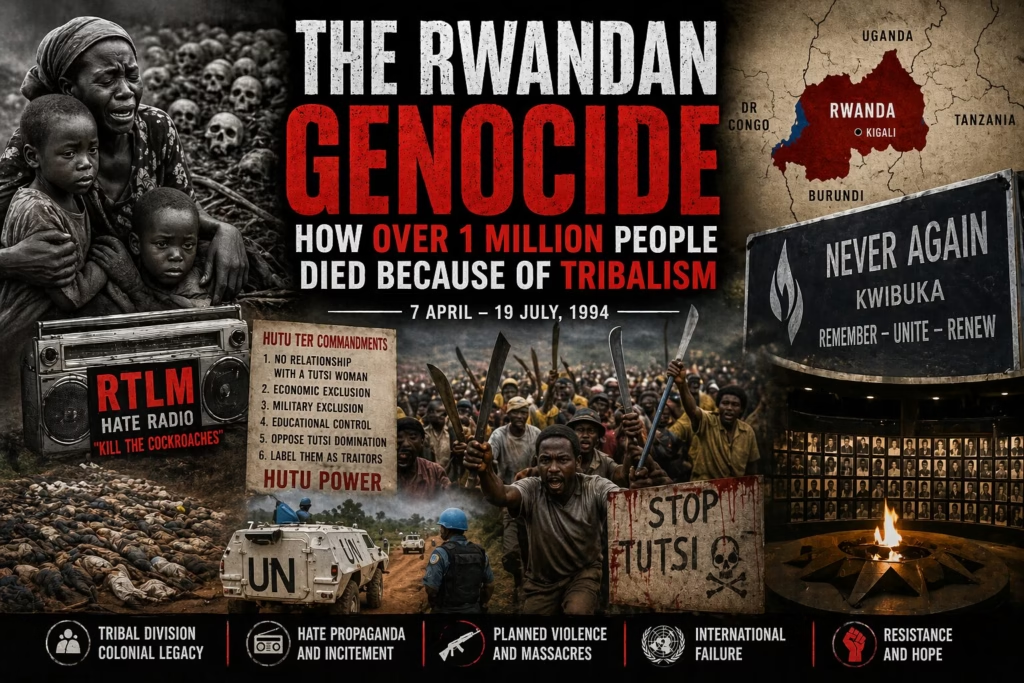
The Rwandan Genocide serves as a powerful lesson about the dangers of tribalism, hate speech, and division.
It shows how propaganda, when left unchecked, can dehumanize entire groups and justify violence in the minds of ordinary people.
For countries like Ghana and others across Africa, the message is clear: unity must always take precedence over division.
Whether based on tribe, religion, or politics, any form of “us versus them” thinking has the potential to escalate beyond control.
History has already shown how far it can go.
The responsibility now lies with each generation to ensure it never happens again.