

|
Getting your Trinity Audio player ready...
|
Before modern genres, Sekondi’s music began with the rhythmic chants and ocean-faring melodies of local fishermen, which made their hard labor easier and signaled a successful catch to the city.
This native Fante rhythm was embraced by both locals and British colonial military brass bands, sparking the rise of traveling concert parties. The construction of the Sekondi Railway in the 1890s brought cultural diversity to the city.
The arrival of traders, colonial workers, and people from different parts of Ghana transformed Sekondi into a melting pot of cultures.
The city became a place where indigenous sounds met foreign influences, creating an atmosphere where creativity could flourish. Music became more than entertainment; it was a reflection of the people’s daily struggles, celebrations, and identity.

There came the golden era where local brass bands began performing for Eurocentric elites.
Between the 1920s and 1950s, early dance orchestras like the Sekondi Nanshamang blended traditional African polyrhythms with Western brass, jazz, and guitar, birthing the legendary Highlife music genre.
Sekondi quickly became one of the important homes of Ghana’s Highlife movement. The sound travelled beyond the shores of the Western Region, influencing generations of musicians across the country and the African continent.
Highlife became a symbol of modern African expression, combining tradition with global sounds.
In 1973, a native born on the 11th street of Sekondi, Gyedu BLAY Ambolley, pioneered the “Simigwa” genre—a fusion of Ghanaian Highlife, jazz, and American funk.
His spoken-word rap style over these beats laid the foundational groundwork for modern Ghanaian Hiplife.
Ambolley’s innovation proved that Sekondi had always been ahead of its time. Long before rap became a dominant force in Ghanaian popular music, his experimental approach showed that African rhythms could comfortably merge with global musical styles while maintaining their original identity.
After its golden eras, Sekondi’s music scene experienced a period of diminished energy and quiet nurturing.
The talents, the sound, and energy got tarred. Instead of waiting for a comeback, the city created its own lane by adopting American Trap music (from the late 1990s) and infusing it with the traditional Fante rhythm.
The new generation of artists understood the responsibility of carrying the city’s musical legacy forward.
Rather than copying foreign sounds completely, they transformed Trap into a uniquely Sekondi expression, adding local language, experiences, and cultural references.
After years of musical dormancy, Sekondi is finding its voice again. A collective led by Rigiid, Waalca, YSN Tasti, Dizturb GH, and others have launched a new movement many in the city are calling Fanti Trap Music.

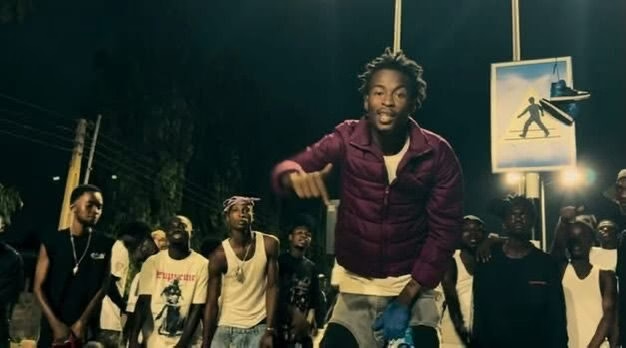



Rooted in the same streets that birthed Gyedu-Blay Ambolley’s Simigwa, this generation is flipping the script to fit the modern market — a fusion of local pidgin and Fante hooks layered over stories of hustle, love, and survival.
Their sound doesn’t abandon Sekondi’s Highlife DNA; it samples it, distorts it, and drags it into 2026.
The breakout tracks are already defining the moment. Rigiid’s gritty anthem “Ghetto” captures the city’s grinding ambition, while YSN Tasti’s “Golden Boy” offers a melodic, introspective contrast about hope beyond the struggle. Waalca leans into resilience with “Can U Imagine.”
Together, these songs are more than playlists; they are pulling crowds back to Sekondi venues, sparking street cyphers, and giving the city’s youth a new cultural rallying point.
The movement is not only creating entertainment but also restoring pride in a city that has contributed greatly to Ghana’s musical timeline.
For the first time in years, Sekondi isn’t just remembering its musical past. It is exporting a fresh sound of its own and introducing a new generation of storytellers to the world.
This new Fanti Trap movement proves that Sekondi remains a creative powerhouse where history continually repeats itself through an endless musical journey.
From the fishermen’s chants on the shores of the Atlantic Ocean to Highlife legends and now the rise of Fanti Trap, Sekondi’s musical heartbeat continues to evolve, proving that every era produces a new sound and a new voice.
Author – Hertilious